The Benefits of Paint Protection Film: Why Every Car Owner Should Consider It
Paint protection film is a clear urethane layer that absorbs rock chips, scratches, and chemical etching before they ever reach your paint. The benefits are impact resistance, self-healing of light scratches, UV and stain protection, easier washing, and a stronger resale price. Quality film carries a 10 to 12 year manufacturer's limited warranty.
The harder question is not whether film works. It is how much of your vehicle actually needs it. Coverage drives the price, which is why the paint protection film packages in Fort Wayne run from a partial front kit to a full body wrap. Below is what the film does, where damage really lands, and when the honest answer is that you do not need full coverage.
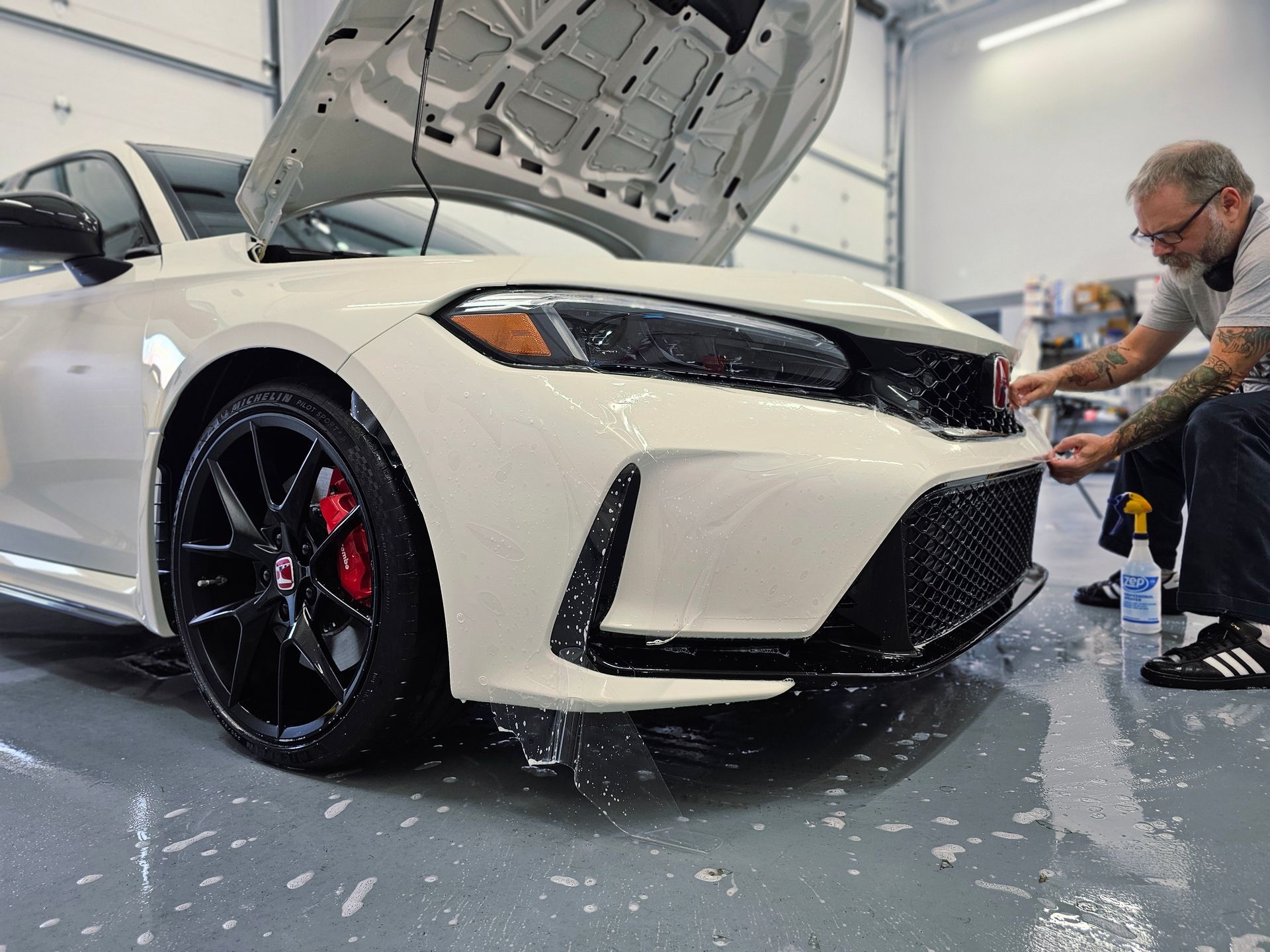
Paint Protection Film Is a Clear Urethane Layer, Not a Coating
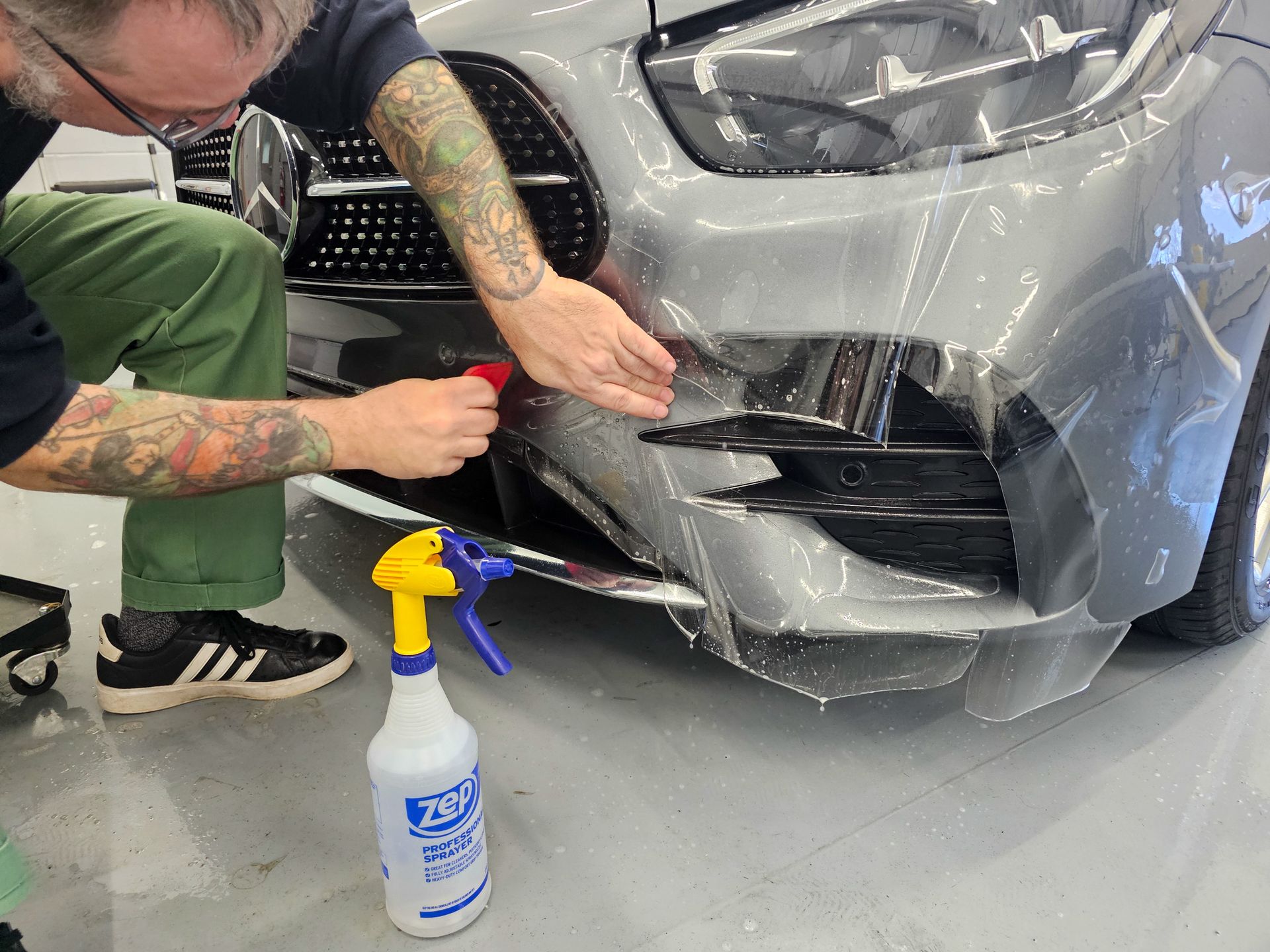
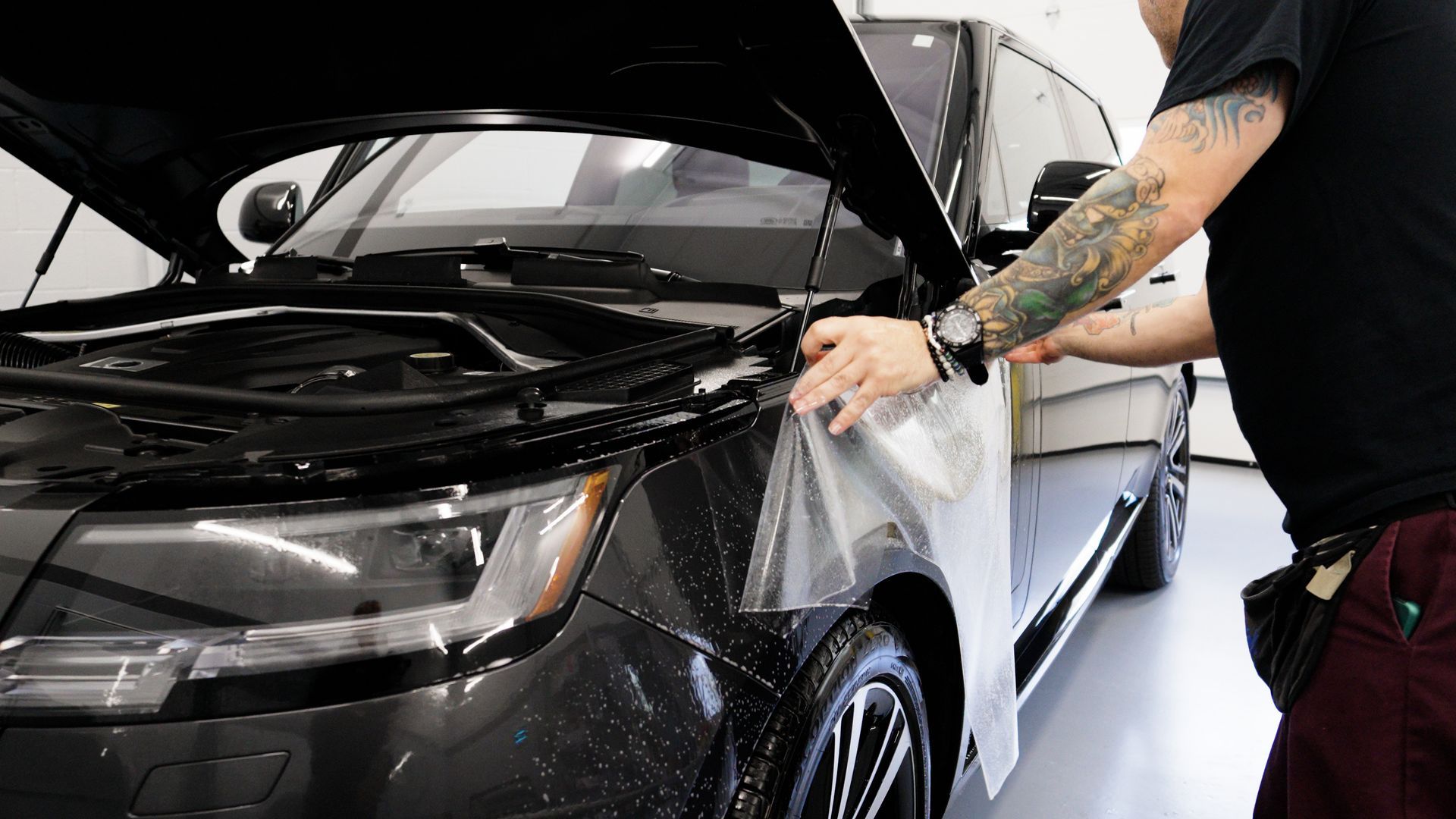
PPF, sometimes called a clear bra, is a thermoplastic polyurethane film applied over your painted panels. It is a physical layer with real thickness, which is what separates it from waxes, sealants, and ceramic coatings. Those bond chemically to your clear coat and change how it behaves. Film sits on top and takes the hit instead.
That distinction decides what each product can and cannot do. A coating will not stop a stone thrown off a truck tire on I-69. A film will. At 14/69 Super Center, the film is cut to your vehicle's exact contours and hand applied with wrapped edges, so once it has cured, the protection is close to invisible.
The Film Absorbs Impacts Your Clear Coat Cannot
Factory clear coat is a few thousandths of an inch of hardened resin. It handles sunlight and rain. It does not handle chip seal aggregate arriving at highway speed. When it fails, it goes through to bare metal, and in a salt state, that chip becomes a rust site within a season.
Film spreads that energy across a flexible layer and stops the chip at the surface. The same layer takes the parking lot door edge, the shopping cart scuff, the abrasion from loading cargo over a rear bumper. None of it reaches your paint. For anyone putting real highway miles on a vehicle, this benefit pays for the film on its own.
Self-Healing Film Erases Light Scratches With Heat Alone
Modern PPF has a self-healing top layer. Swirl marks and light surface scratches in the film disappear when heat is applied, either from a warm wash, sunlight, or the heat coming off your own engine bay. There is no polishing, no touch-up, and no trip back to the shop.
This matters more than it sounds. What makes a three-year-old car look three years old is rarely one dramatic scratch. It is wash swirls and micro marring accumulating across every panel. Self-healing film resets that continuously, which is why a wrapped hood still reads as showroom finish long after an unwrapped one has gone dull.
UV, Road Salt, and Tree Sap Are Stopped at the Film, Not the Paint
Sunlight oxidizes pigment and breaks down clear coat over time, which is how red paint goes chalky and black paint goes grey. Quality film carries UV inhibitors that absorb that energy before it reaches the finish. We covered the UV inhibitors built into modern film in more detail if you want the chemistry.
Chemical damage works differently. Bird droppings, insect residue, and tree sap are acidic and etch into clear coat if they sit. Film gives them a sacrificial surface instead, and stain-resistant top coats like SunTek's HydroResist keep them from bonding at all.
Then there is winter. Northeast Indiana roads get treated aggressively, and brine works its way into every existing chip and seam. A sealed panel has nothing for it to get into. If you drive the I-469 loop through January and February, read our full breakdown of how PPF holds up through an Indiana winter.
Where the Damage Actually Lands on Your Vehicle
It is more useful to look at where your vehicle actually gets hit, because that is what decides how much film you need and what you pay for it.
- Front bumper, hood leading edge, and mirrors. Stone strikes at speed. This is where the overwhelming majority of chips happen, and it is why the Partial Deluxe Kit covers the front bumper, partial hood, mirrors, and partial front fenders.
- Full hood and full front fenders. Highway debris does not stop at the edge of a partial wrap, and on dark paint the line between wrapped and unwrapped shows as the unwrapped section ages. The Full Front Deluxe Kit covers the whole hood and both fenders.
- Rocker panels. Salt spray and stone throw from your own tires. Rockers take constant low-level abuse that nobody notices until the paint is already gone.
- Headlights and fog lights. Polycarbonate lenses pit and haze, which cuts light output and dates a vehicle fast. Film keeps them clear.
- Rear splash area. Scuffs from loading and unloading, plus road spray thrown up behind the wheels.
The Signature Package covers all of the above and layers a ceramic coating over the film. Beyond that, Full Body PPF wraps every painted panel and is available in clear or matte, which is the usual choice for performance and luxury vehicles. If your car does not fit any of these tiers cleanly, a la carte coverage is priced by panel size and film type. Corvette owners tend to land here, since coverage priorities on a C8 are not the same as on a daily driver.
Paint Protection Film Lasts 10 to 12 Years Depending on the Film
Lifespan is set by the product, not by guesswork. As an authorized SunTek installer, 14/69 Super Center carries four film lines, each with its own manufacturer's limited warranty:
- Reaction. Self-healing Tetrashield technology combined with ceramic-level hydrophobicity in a single film. 12-year manufacturer's limited warranty.
- Ultra. HydroResist top coat for stain resistance, self-heals using heat from the engine or the sun. 10-year manufacturer's limited warranty.
- Ultra Matte. Everything Ultra does in a satin finish, for changing a vehicle's look or protecting factory matte paint. 10-year manufacturer's limited warranty.
- Ultra Defense. Thicker and stronger for the best chip resistance, with the same HydroResist top coat. 10-year manufacturer's limited warranty.
Details on each are on our SunTek Reaction, Ultra and Ultra Defense films page, which also carries a coverage simulator so you can preview an install before you book. Warranty restrictions apply, and terms come from the manufacturer, so ask us to walk you through the specifics for your film.
Paint Protection Film and Ceramic Coating Stack, They Are Not Rivals
This is the most common misunderstanding we hear, and it costs people money in both directions. Film is physical protection. Ceramic coating is a chemical layer that adds gloss, slickness, and water repellency. Different jobs, and the strongest results come from running them together.
There are two ways to get there. SunTek Reaction builds the hydrophobic layer into the film itself, so one product does both. Or a coating goes over the film, which is how the Signature Package is built. Our Onyx Graphene Pure ceramic coating is a 10H, N1 smoothness coating rated for 7 or more years, and it can be applied over wrapped and unwrapped panels alike so the whole vehicle behaves the same way in the rain.
The same logic extends past paint. Ceramic window tinting handles heat and UV coming through the glass, and our Forever New protection packages cover the surfaces film does not touch. Neither replaces PPF. They close the gaps around it.
Preparation Decides Whether the Install Lasts
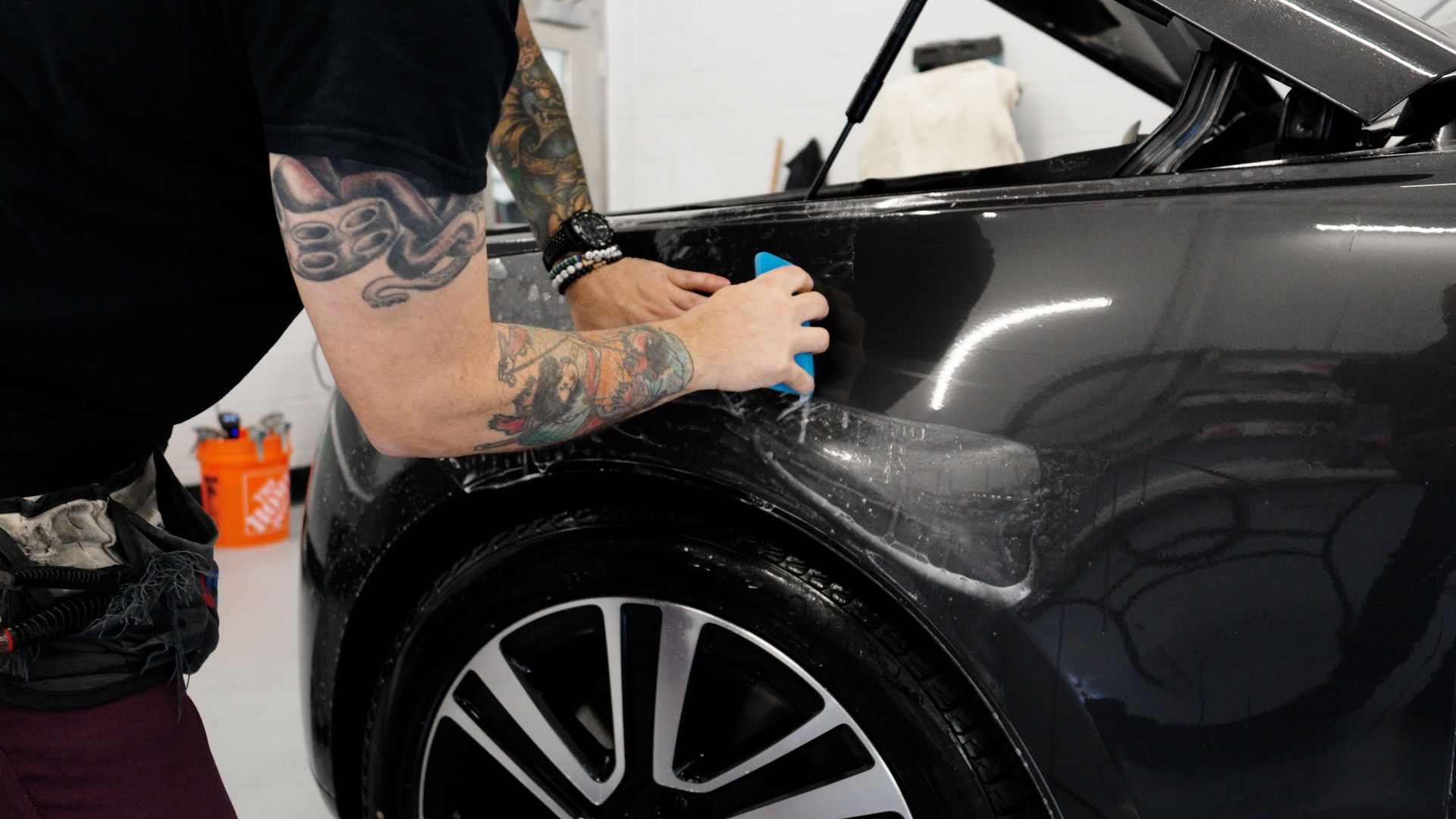
Here is the part almost no one writes about. Film is only as good as the surface underneath it. Paint that looks clean still carries embedded iron particles, bonded industrial fallout, and road film sitting inside the clear coat. Wrap over that, and you have sealed contaminants against your paint for the life of the film.
The failure is invisible. You will not see it for years, and then it turns up the day the film comes off. That is why our process starts with a full decontamination, including a clay bar treatment to pull bonded contaminants out of the paint, before any film is cut. The same prep discipline runs through our
full paint decontamination and clay bar prep work.
When Paint Protection Film Is Not the Right Call
Full body PPF is not the answer for every vehicle, and we would rather say so than sell you coverage you will not get value from.
- High-mileage commuters near the end of their life. If the resale ceiling is below what a full wrap costs, a partial front kit protects what actually gets hit and leaves the rest alone.
- Vehicles you plan to repaint or sell within a year. The math does not work over that horizon.
- Owners whose real complaint is gloss and washing effort, not chips. That is a ceramic coating conversation, not a film one.
The reverse is also true. New vehicles, leases with wear clauses, dark or custom paint, and anything driven on gravel or highway daily are cases where film is clearly the correct spend.
What Paint Protection Film Costs in Fort Wayne
Pricing at 1469 Super Center starts at $850 for the Partial Deluxe Kit. The Full Front Deluxe Kit starts at $1,600, or $1,900 for trucks and SUVs. The Signature Package starts at $3,500 and includes the ceramic coating layer. Full Body PPF is quoted per vehicle.
Set that against repainting a hood and front bumper, particularly on metallic and tri-coat finishes where color matching is difficult, and the arithmetic usually settles itself. Coverage, panel size, and film choice all move the number, which is why we quote after seeing the vehicle.
Protect the Paint You Already Paid For
We have been detailing vehicles in Fort Wayne since 1999, and we are an International Detailing Association certified shop and an authorized SunTek installer. Our team works out of 175 Grand National Dr and serves Fort Wayne Metro, Decatur, Warsaw, New Haven, Wawasee, and Lake James.
Bring us the vehicle, and we will walk the panels with you, show you where damage is already starting, and build coverage around how you actually drive. Call (260) 436-9274 or request a PPF quote for a direct number on your vehicle.
Frequently Asked Questions
Is paint protection film worth it?
For most drivers, yes. Film runs from $850 for front-end coverage, against repaint costs that typically exceed that for a single panel set. It is most clearly worth it on new vehicles, dark or custom paint, and cars driven on highways or gravel daily.
How long does paint protection film last?
Ten to twelve years, depending on the film. SunTek Ultra, Ultra Matte, and Ultra Defense each carry a 10 year manufacturer's limited warranty, and Reaction carries 12 years. Care and exposure affect real-world life.
Does PPF damage paint when it is removed?
No, when it is quality film that has been professionally installed and removed. The adhesive releases with heat and the paint underneath is generally in better condition than the surrounding unwrapped panels.
Can you put ceramic coating over paint protection film?
Yes, and it is a common combination. That is how the Signature Package is built. Alternatively SunTek Reaction has the hydrophobic layer built into the film, so a separate coating is not required on wrapped panels.
How much does PPF cost in Fort Wayne, Indiana?
From $850 for the Partial Deluxe Kit, $1,600 for the Full Front Deluxe Kit and $1,900 for trucks and SUVs, and $3,500 for the Signature Package. Full body coverage and a la carte panels are quoted individually.