Yes. Ceramic coating can be applied over paint protection film, and on a properly sequenced protection job, that is exactly how it is done. The coating goes on last, over the film and the surrounding bare paint together, so the whole vehicle behaves the same way.
The longer answer is that three things have to line up before it is a good idea, and none of the pages telling you "yes, absolutely" mention any of them. If you are planning
paint protection film on your vehicle, or you already have it and are wondering whether a coating is worth adding, here is what actually decides the answer.
Why the Two Work Together Instead of Competing
Paint takes damage from two different directions, and each product handles one of them.
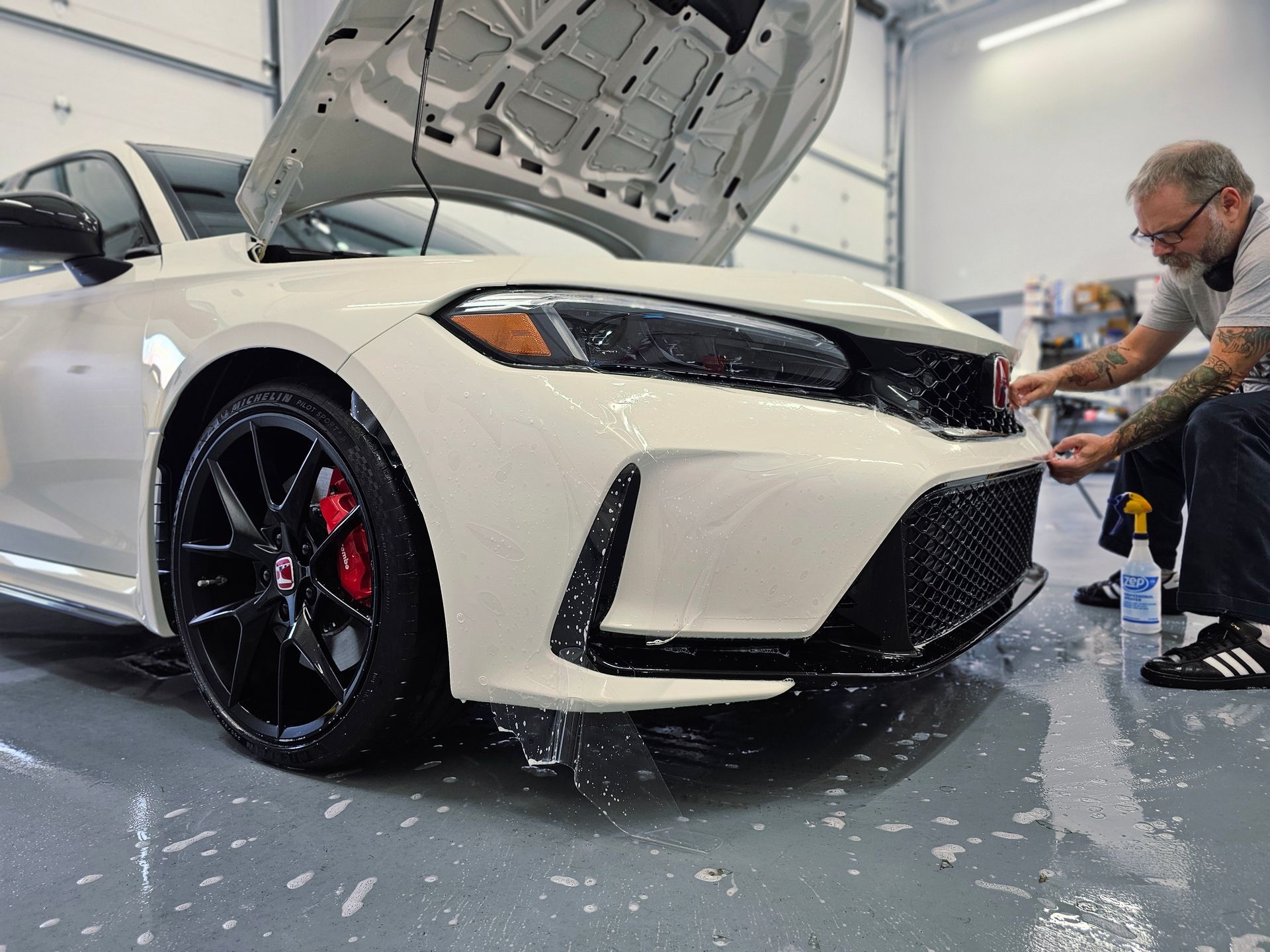
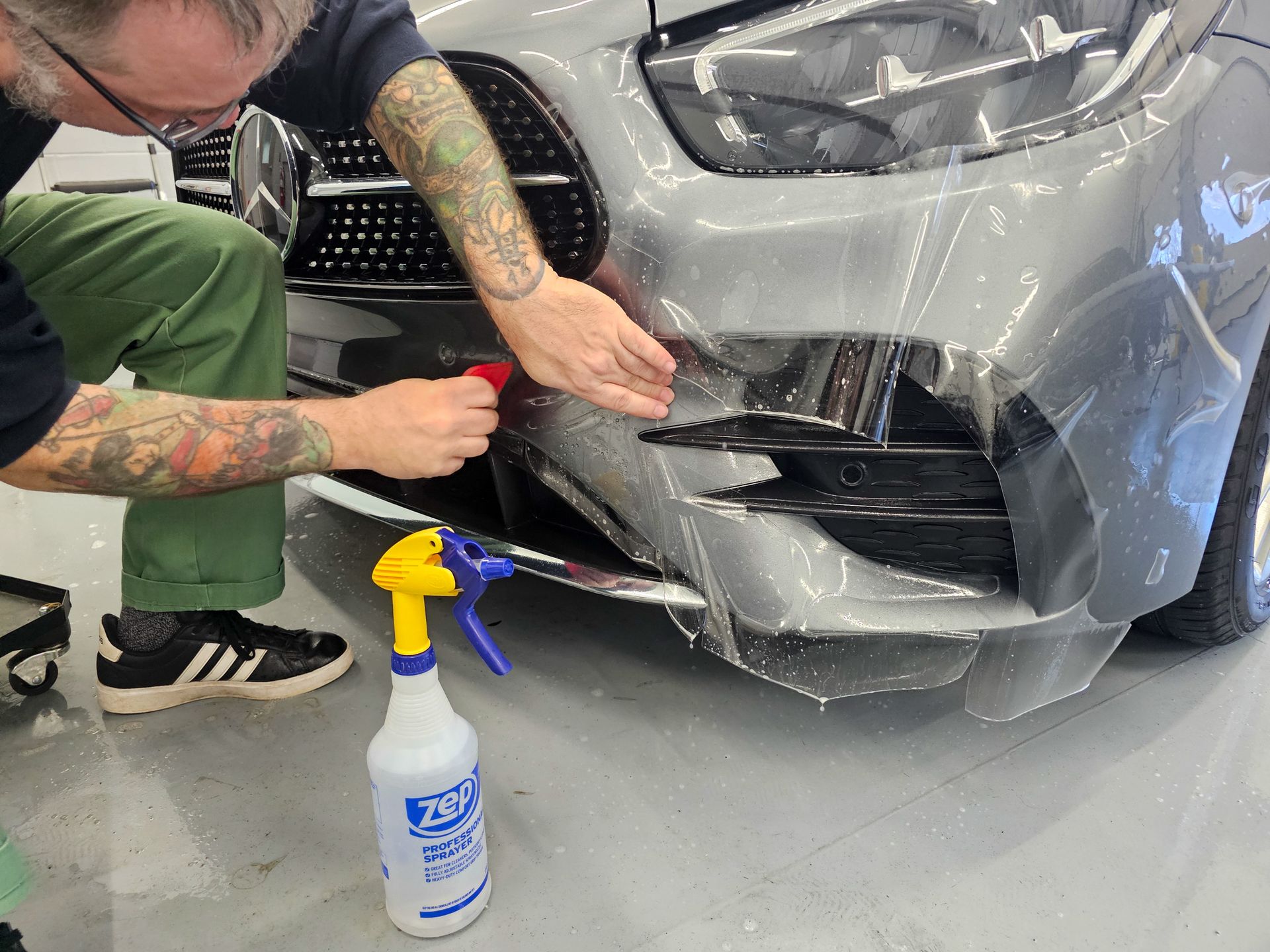
Paint protection film is a physical barrier. It is a urethane layer over the paint that absorbs and disperses impact, so a stone off a gravel shoulder hits the film instead of your clear coat. Modern film also self-heals, meaning light swirls in the surface recover when heat is applied.
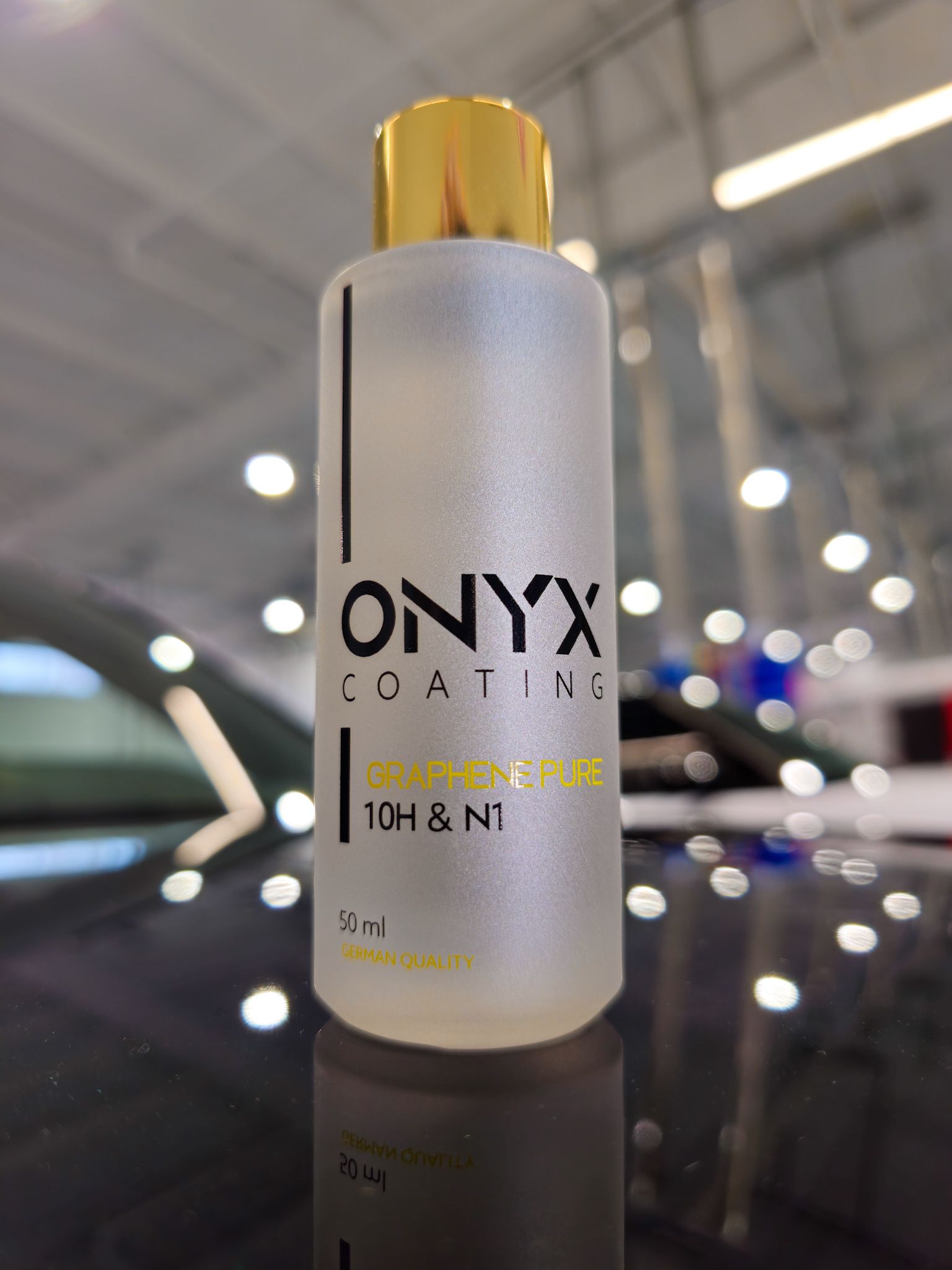
Ceramic coating is a chemical barrier. It bonds to the surface and changes how that surface interacts with water, contaminants, and UV. Water beads and sheets off instead of drying into mineral spots, and bird droppings and road film release before they etch. Our paint correction and ceramic coating work is built around that.
What each one does not do is just as useful. Film does not make your vehicle easier to wash. Coating does not stop a rock chip. Because they solve different problems, they stack instead of competing, and the coating always goes on top.
Three Things That Have to Line Up First
Before we quote a coating over film, we check three things. Any one of them can change the answer.
The film's finish
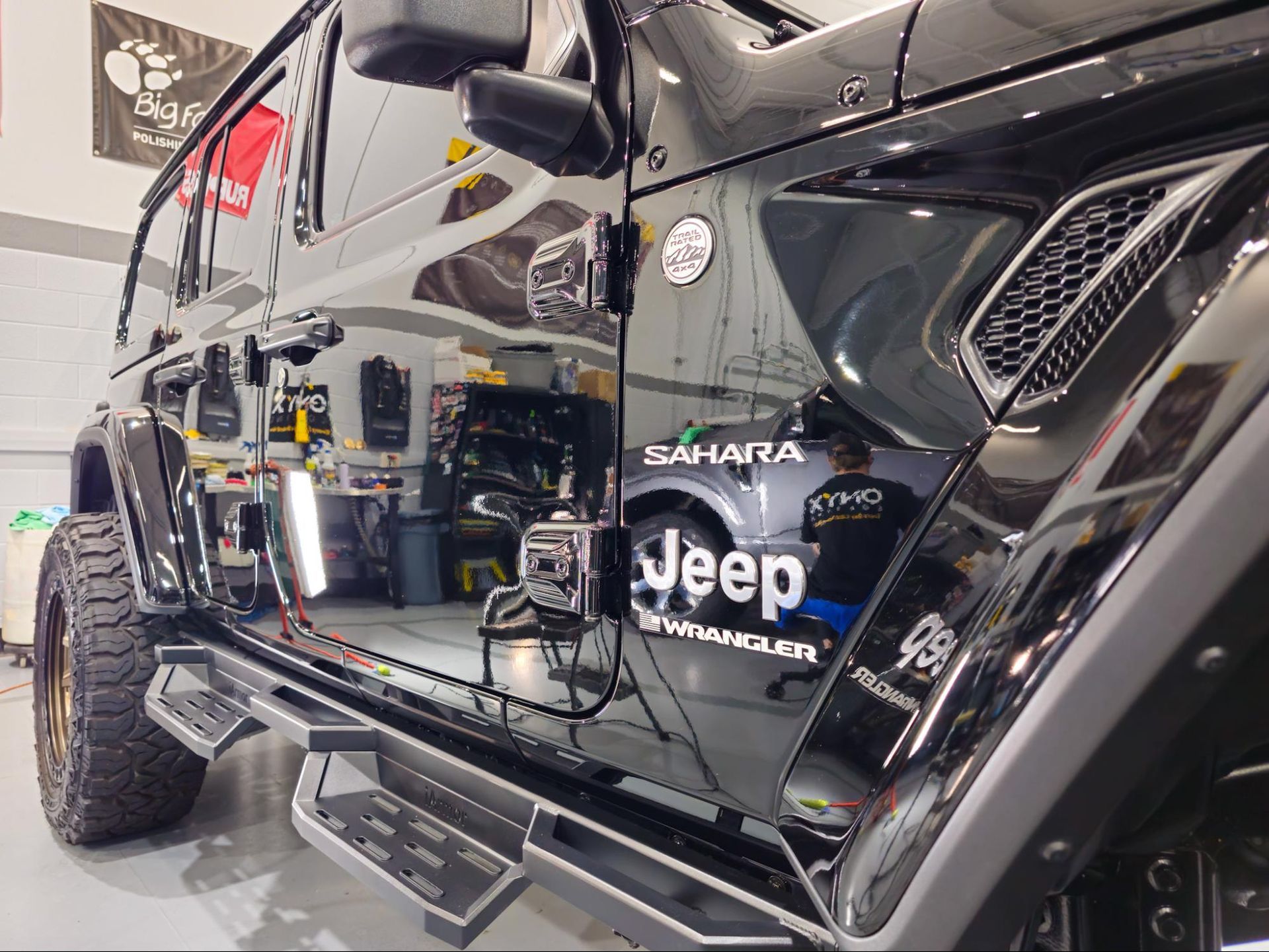
Gloss film and matte or satin film are not interchangeable here. A standard ceramic coating is formulated to add gloss and depth, which is what you want on gloss film. Put that same coating on satin film, and you add shine the owner specifically paid to avoid, with no undoing it short of removing the coating. Matte and satin film need a coating formulated for matte surfaces. This matters most on finish-sensitive vehicles, which is why our Corvette owners ask about it first.
The timing
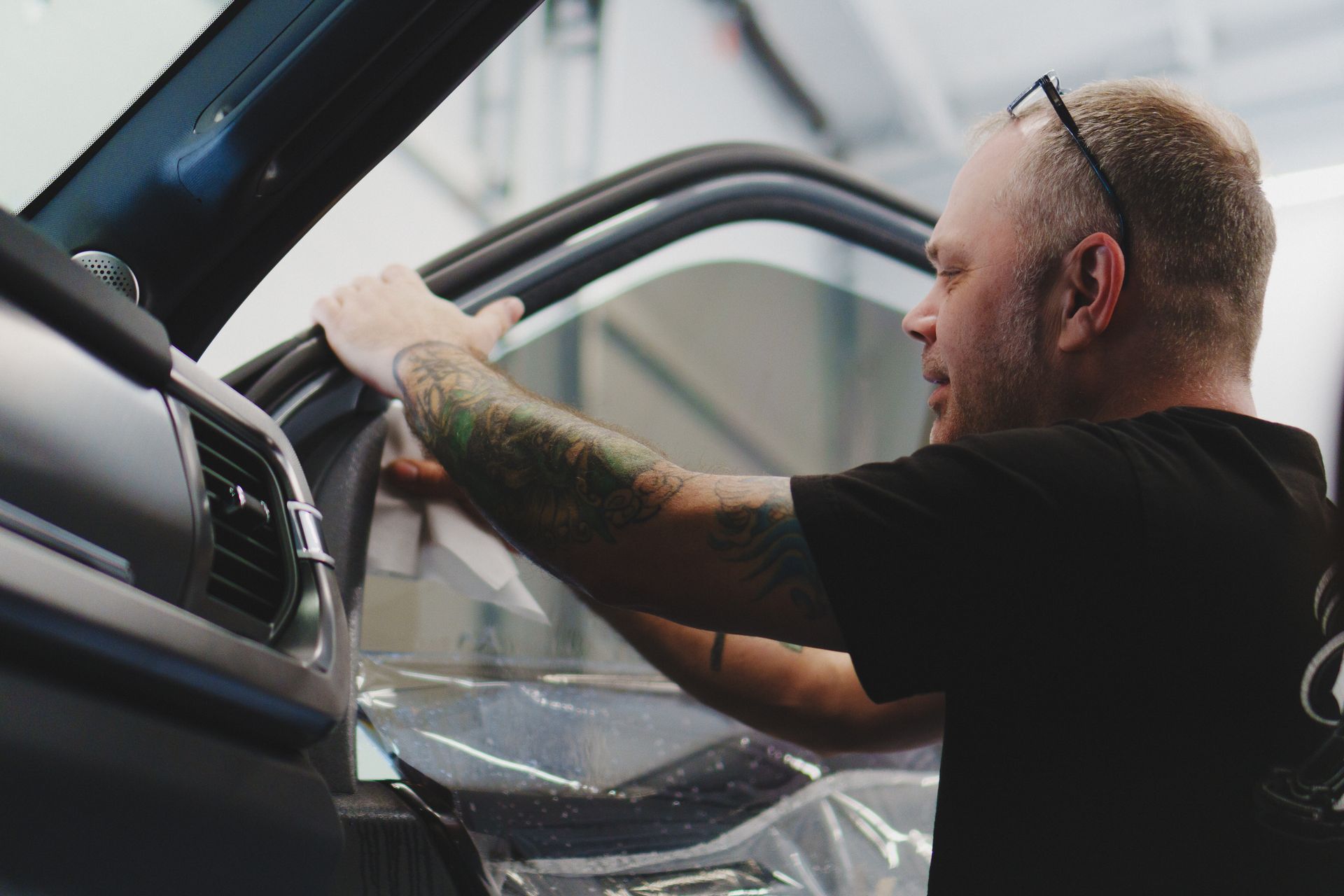
Film is installed wet, and the adhesive keeps curing after the installer walks away. Small bubbles and light haziness are normal immediately after installation and clear as the film settles, which typically takes somewhere in the range of one to two weeks depending on the film, the temperature, and the humidity. Sealing a semi-permanent coating over film that has not finished that process traps moisture and haze underneath it. Waiting is not a formality. It is the difference between a finish that clears up and one that does not.
The coating chemistry
Ceramic coatings are formulated to bond with clear coat. Film is urethane, a different surface, and not every coating behaves identically on it. Some sit correctly and deepen the finish. Others flash differently, level differently, or change the look in ways the owner did not ask for. That is not a reason to skip the coating. It is a reason to know which product is going on in your film.
What You Actually Gain, and Where
On the filmed panels, a coating gives you real and noticeable things. Water beads and sheets instead of sitting. Bugs, road film, and bird droppings release with far less effort.
The gloss deepens. Washing produces less marring because the surface is slicker.
Here is the part nobody else will tell you. Modern film already ships with a hydrophobic self-healing topcoat, so it is not starting from zero. The coating improves on something that already performs well. The gain on a filmed panel is genuine, but it is an improvement rather than a transformation.
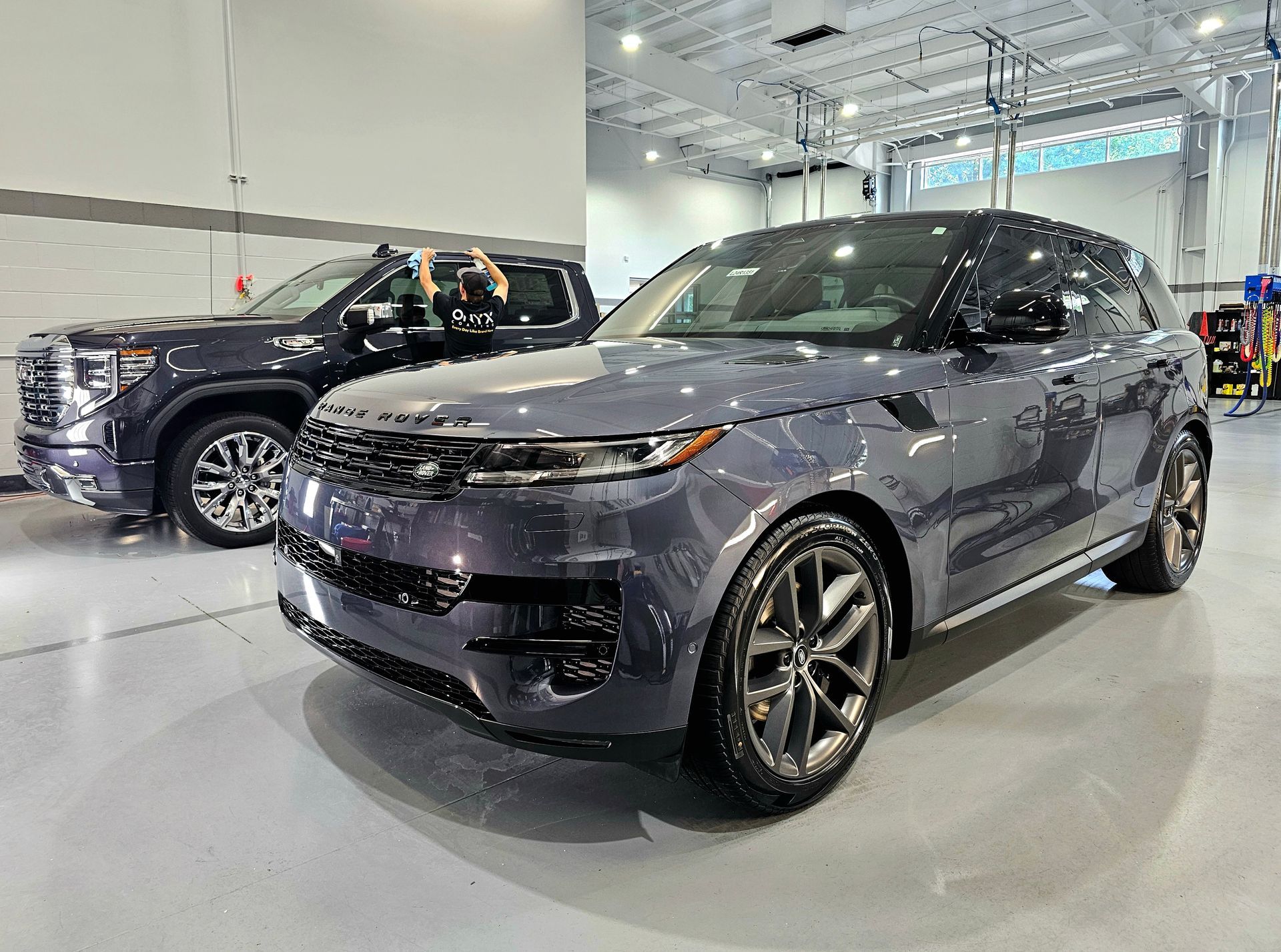
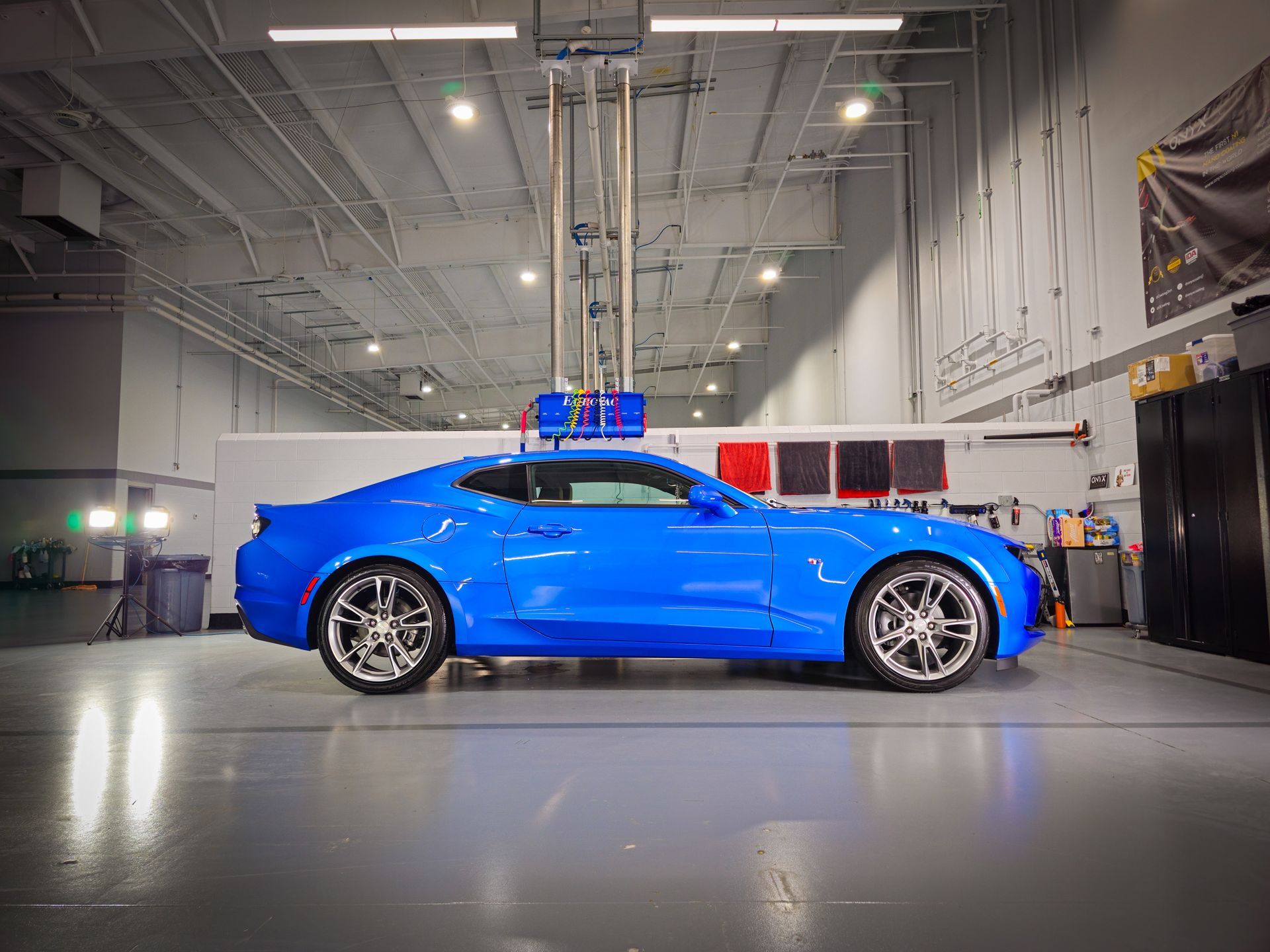
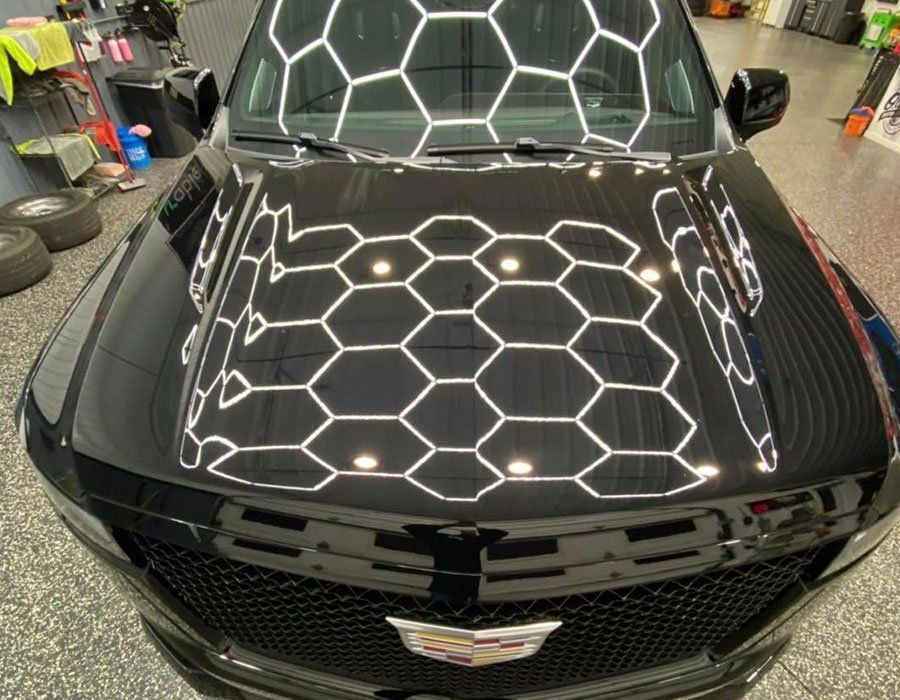
The transformation happens everywhere else. Most vehicles get film on the front end, which leaves the doors, roof, rear quarters, and decklid with nothing beyond the factory clear coat. Coating the whole vehicle gives those panels a chemical barrier they otherwise do not have, and it makes the car behave as one surface. Filmed and bare panels shed water the same way, clean the same way, and reflect light the same way.
That matters more than it sounds. Film sits slightly proud of the paint, and a car with a coated front end and an uncoated rear can read as two finishes in direct light. Coating everything removes that, which is why our full vehicle detailing and protection packages are built around the whole car.
How We Sequence It at 1469 Super Center
Order matters, because anything left under the film or the coating is locked in.
Paint correction comes first. Machine polishing removes the swirls and defects already in the paint, because film and coating both preserve whatever is underneath rather than hide it. Correcting afterward means taking the protection off.
Film goes on next, installed with wrapped edges and left to cure in our facility for the recommended period. That cure window is not padding in the schedule. It is the timing condition from earlier in this article.
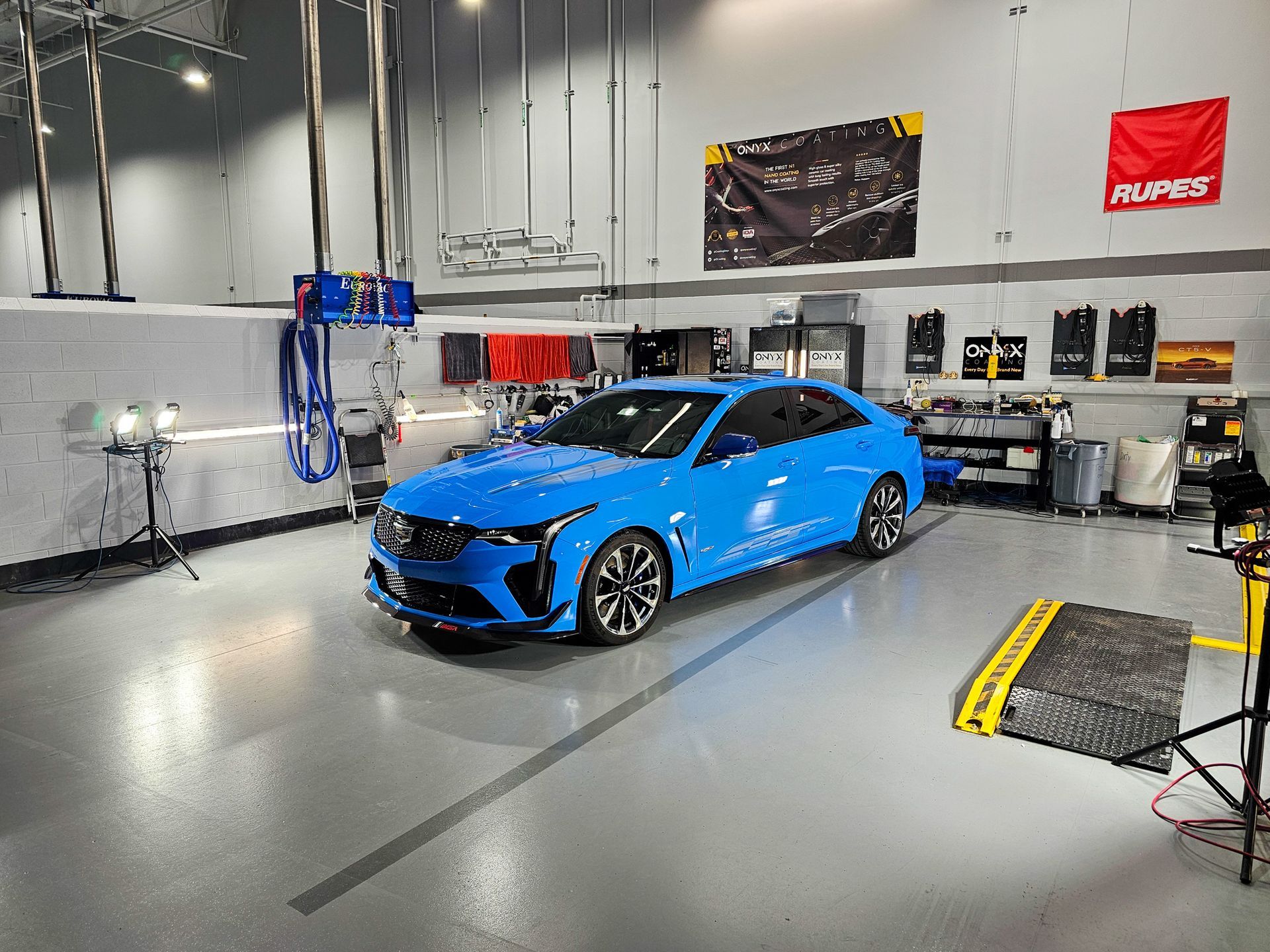
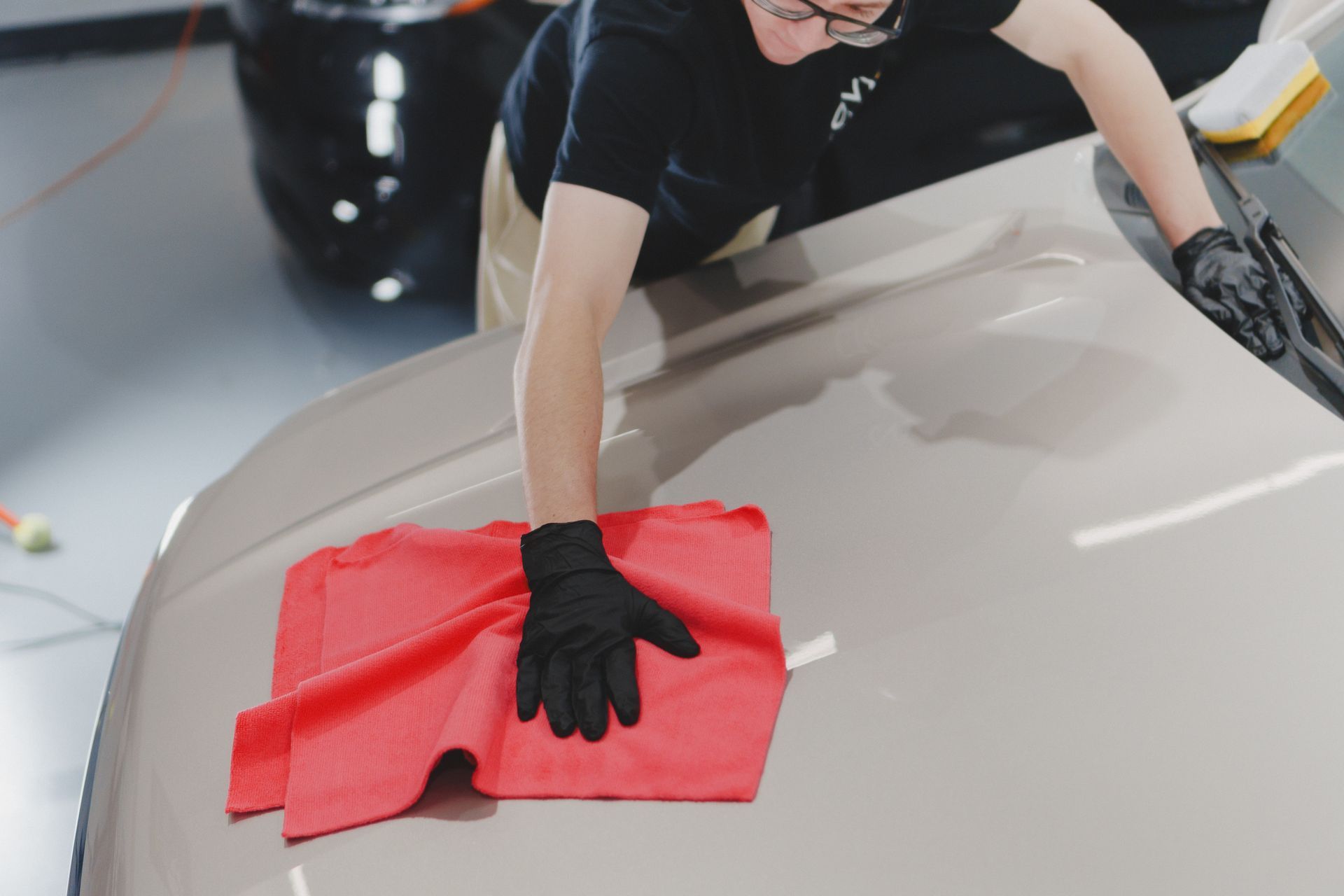
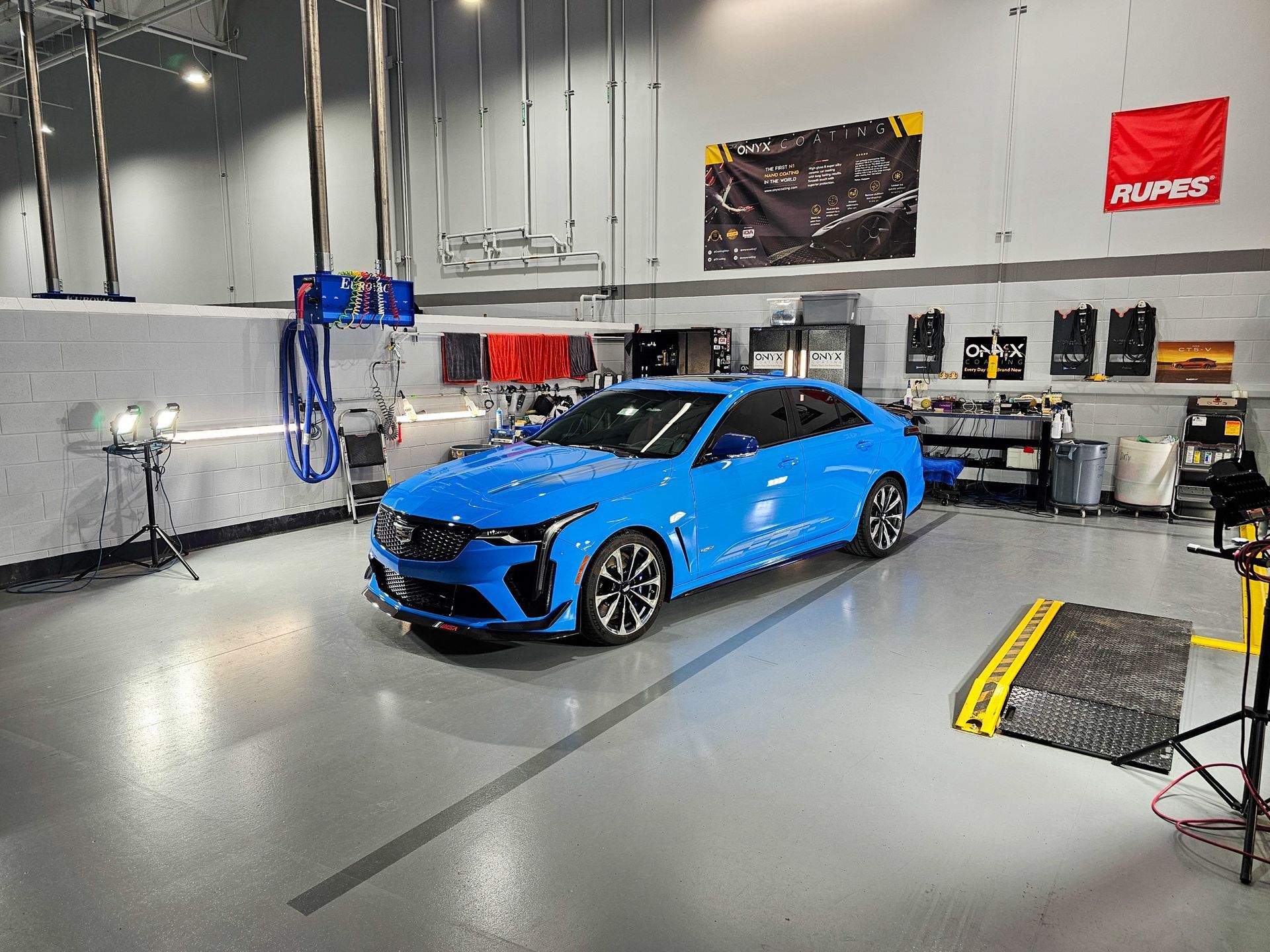
Once the film has settled, the vehicle is decontaminated and wiped down so nothing is sealed under the coating. The coating is then applied across film and bare paint in one pass, and the vehicle cures indoors before it goes back out. Our climate-controlled delivery bays matter here, because coatings cure to temperature and humidity, and Indiana weather does not cooperate on request.
Living With a Coated, Filmed Vehicle in Northeast Indiana
Aftercare on a coated vehicle is simple, and it is not optional. Hand wash with a pH-neutral soap using two buckets and a microfiber mitt, then dry promptly with a clean drying towel rather than letting water evaporate. Skip brush car washes entirely, because the brushes are what put marring into the surface in the first place. Touchless is the reasonable compromise on a cold week. Our ceramic coating care guides cover the routine in more detail.
The Northeast Indiana case for doing both is stronger than it is in most of the country. Road salt and brine sit on vehicles here for months at a time, and a coated surface releases that film with a rinse instead of holding onto it. Winter also throws more grit at the front end, which is the impact argument for film. Trucks take the worst of it, which is why the same customers often add a spray-on bedliner at the same time, and why rust and undercoating protection cover the surfaces film and coating never reach.
Two Things to Know Before You Commit
Neither is a reason to skip the coating. Both are reasons to have one shop sequence the work rather than stacking services from two places months apart.
Removing film from a coated panel is a different job. The coating sits on top of the film, so the surface a technician is working with when the film eventually comes off is not the surface they would be working on an uncoated vehicle. It is manageable, but it should be done by someone who knows what is in the car.
Future paint correction means the coating comes off first. A coating is semi-permanent by design. If a panel needs correcting down the road, the coating has to be removed and reapplied. That is the whole argument for getting the paint right before any protection goes on.
Get Both Done Right in Fort Wayne
1469 Super Center has been protecting vehicles in Fort Wayne since 1999. We are an International Detailing Association certified shop and an authorized Onyx Ceramic Coating application site, and we handle paint correction, paint protection film, and ceramic coating under one roof, so the sequencing is never someone else's problem. To talk through what your vehicle needs, request a quote or call (260) 436-9274.
Frequently Asked Questions
Should ceramic coating go on before or after PPF?
After. The coating is applied last, over both the film and the surrounding bare paint. Coating the paint first and then installing film on top of it is the wrong order, because film adhesion is designed for clear coat rather than for a cured coating layer.
How long should you wait after PPF installation before applying ceramic coating?
Until the film has finished settling and the adhesive has cured, commonly somewhere in the one- to two-week range depending on the film, temperature, and humidity. Coating sooner risks sealing moisture and haze under a semi-permanent layer. Your installer should give you a specific window.
Can you ceramic coat matte or satin paint protection film?
Only with a coating formulated for matte finishes. A standard gloss ceramic coating will add shine to satin film, which defeats the point of choosing satin in the first place and cannot be reversed without removing the coating. Always confirm the product is matte-safe before it goes on.
Does ceramic coating stop PPF from self-healing?
A coating is a very thin layer, and the self-healing happens in the film's own topcoat underneath it, so the mechanism is still there. If you are unsure, ask your installer how your specific coating interacts with the film.
Do you install PPF and ceramic coating in the same visit?
Not in a single visit, because the film needs its cure period before the coating goes on. We schedule it as a sequenced job so the timing is handled for you. If you want window tinting as well, that can usually be worked into the same overall plan.