How to Wash a Ceramic-Coated Vehicle During an Indiana Winter
Your ceramic coating is on, the brine trucks are out, and in Fort Wayne the average January high sits right around freezing. That combination leaves plenty of drivers wondering how to wash a ceramic-coated car in winter without undoing the protection they paid for.
The good news is that a coating makes winter washing easier. The key is doing it the right way: rinse salt off often, wait for an above-freezing window, use the right pressure, soap, and drying method, and skip brush washes and hot water. When washing at home isn't practical, a professional Ceramic Maintenance Wash at 1469 Super Center keeps your coating on track. Here's the full routine.
Why Winter Washing Matters Even With a Ceramic Coating
Indiana roads get a heavy dose of salt every winter. According to INDOT, as reported by KPC News, crews pre-treat roads with a brine of water and 23.3% salt, then plow and salt interstates, U.S. routes and state roads every two to three hours during storms. An INDOT spokesperson has even acknowledged to WANE that brine's salt content can be corrosive to vehicles.
A ceramic coating helps that salt release more easily, but it doesn't make it disappear. When salt film and road grime sit on the surface, they can mute the coating's water beading and dull the finish over time. Around Fort Wayne, that buildup tends to collect on the lower panels, the wheels and the rear of the vehicle. That's why we recommend rinsing and washing after driving on salted roads instead of letting the film sit until spring. For more on why regular care pays off, see our post on the benefits of regular ceramic coating maintenance.
Pick the Right Day and Place to Wash
Timing is half the battle in an Indiana winter. Based on NOAA averages from 1991 to 2020, Fort Wayne's average January high is 32.8°F, with an average low of 18.2°F. Fort Wayne also averages about 115 days a year below freezing, according to the Great Lakes Integrated Sciences and Assessments program (GLISA).
A few simple rules make winter washing much easier:
- Wait for an above-freezing window. Below 32°F, water can freeze on the paint, in door jambs and in locks before you can dry it. Midday is usually your best bet.
- Get out of the wind, or wash in a garage if you can. Wind makes water freeze faster and can dry soap on the paint before you rinse it.
- Use cold or lukewarm water, never hot. Hot water can speed up coating breakdown and promote water spotting.
- Give a new coating time. If your coating was just installed, wait at least 7 full days before any high-pressure contact, and longer in cold or humid weather.
Step-by-Step Winter Wash for a Ceramic-Coated Vehicle
Once you've found a good window, here's the routine we recommend.
Step 1: Rinse Off Salt and Grit First
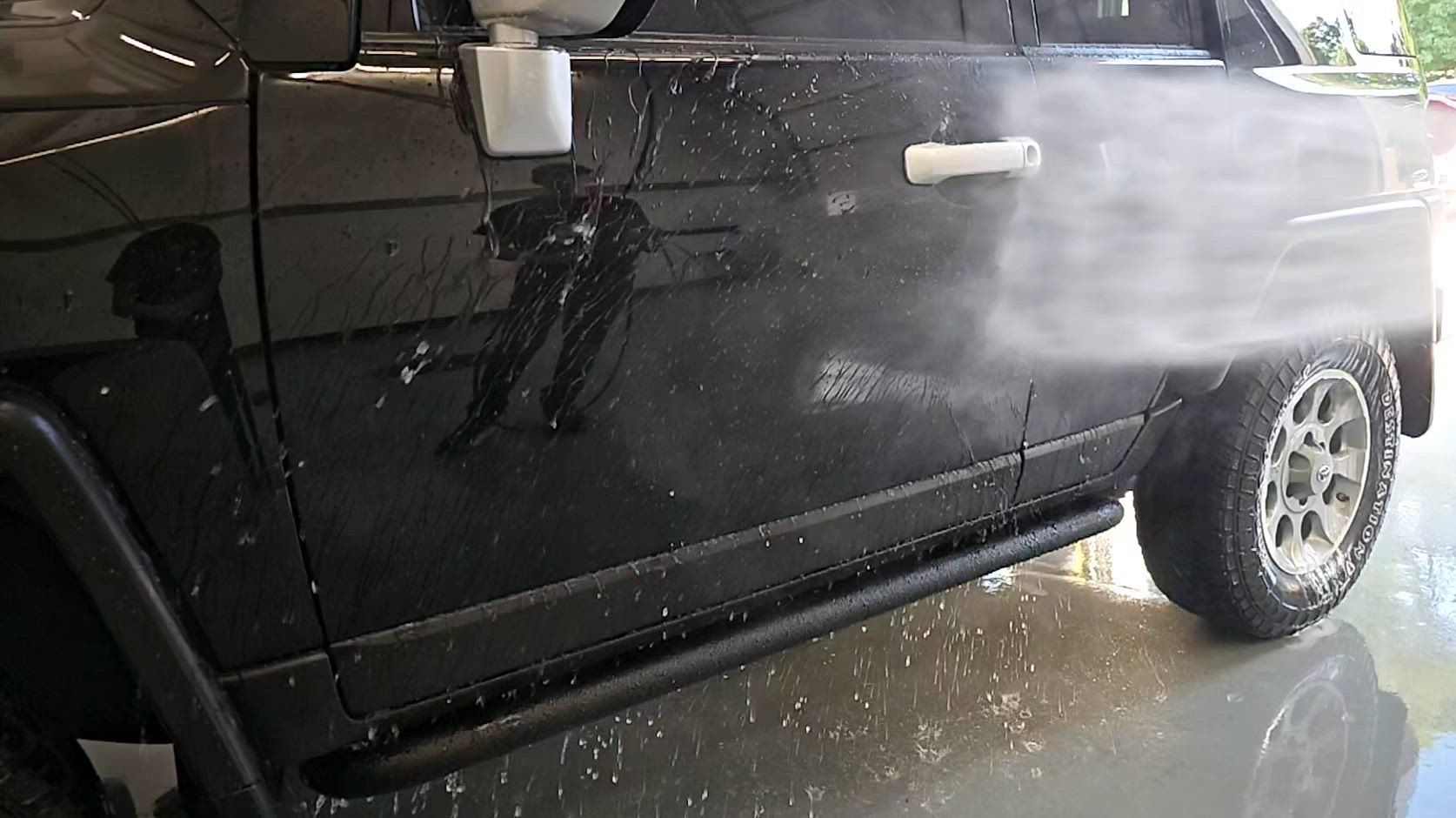
Start by rinsing away loose salt, sand, and grit so you aren't rubbing it into the coating later. If you're using a pressure washer, stay in the 1,000 to 1,900 PSI range (around 1,200 PSI is ideal), use a 40° nozzle on painted surfaces, and keep the wand 12 to 18 inches away. Spend extra time on the rocker panels, wheel wells, and lower doors, where winter grime builds up the most. Our post on pressure washing a ceramic coated car covers every setting in detail.
Step 2: Let a Foam Pre-Soak Loosen the Film
Cover the vehicle with a foam pre-soak and let it dwell for 3 to 5 minutes. That gives the soap time to soften salt film and road grime before you touch the paint. Just don't let the foam dry on the surface.
Step 3: Hand Wash With Two Buckets and pH-Neutral Soap
Fill one bucket with a pH-neutral car soap made for ceramic coatings and the other with clean rinse water. Using a clean microfiber mitt, wash from the top down and save the dirtiest lower panels for last. Use light pressure and straight passes, and rinse the mitt in the clean bucket before loading it with fresh soap.
Step 4: Rinse From the Top Down
Rinse thoroughly from the roof down, flushing soap and loosened salt out of panel gaps, badges, trim and mirror housings.
Step 5: Dry Fast and Dry Everywhere
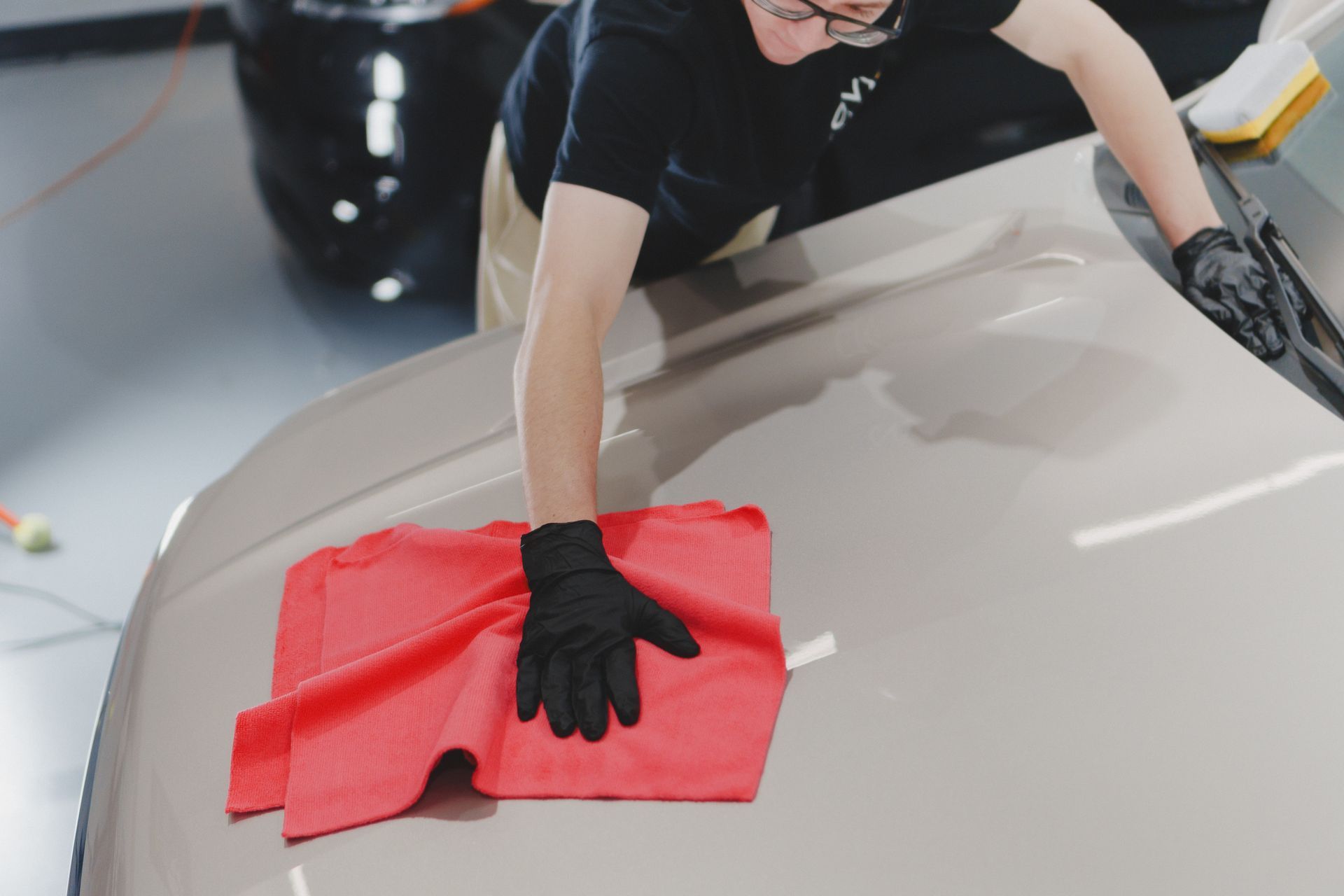
In winter, drying matters more than ever. Use a leaf blower or car dryer first to push water out of crevices, then blot the paint with a clean microfiber towel instead of wiping in circles. Open the doors to dry the jambs and rubber seals, and blow out the mirrors, handles, and locks so nothing freezes shut overnight.
Step 6: Finish the Wheels and Underside
Switch to a 25° nozzle for the wheels and undercarriage. Give the wheel wells and underbody a thorough rinse to flush out the salt that collects where you can't see it.
What to Avoid When Washing in Winter
A few common winter shortcuts can wear down a coating and undo the good work of a careful wash:
- Brush-style automatic washes. They can drag grit across the paint and leave swirl marks, so we consider them off-limits for coated vehicles.
- Leaning on touchless automatic washes. Many use very high pressure, often 3,000+ PSI, along with harsh alkaline chemicals, so they aren't a substitute for a proper wash.
- Coin-op wands at full blast. Commercial wands can exceed 2,500 PSI, well above what we recommend for coated paint. If you use one, keep your distance and skip the foaming brush.
- Hot water, dish soap, and household cleaners.
- Air drying, or letting slush dry on the paint.
- Clay bars and aggressive products at home. Leave decontamination to a professional maintenance wash.
- Hard scrapers or stiff brushes on the paint. Use a soft snow brush or foam snow broom to clear snow instead.
When It's Too Cold to Wash at Home
Some weeks in Fort Wayne, an above-freezing window just doesn't show up. When that happens, you still have good options:
- Rinse whenever you get the chance. A quick rinse on a milder afternoon gets salt off before it settles in.
- Book a Ceramic Maintenance Wash. Our team handles a careful hand wash and dry, chemical decontamination, claying when appropriate, a ceramic sealant on the paint, glass, and wheels, and tire dressing. We also inspect the coating for water spots, uneven water behavior, and contamination while your vehicle is with us.
1469 Super Center is open Monday through Friday, 8:00 AM to 6:00 PM, and you can schedule online or call ahead to book.
Refresh Your Coating When Salt Season Ends
By the time the snow stops, usually around early April in Fort Wayne based on WANE's average last snowfall date, your coating has worked hard for months. If you notice the water beading has weakened, that's a sign the surface needs some attention. Our post on the benefits of regular ceramic coating maintenance walks through the signs to watch for.
A coating-compatible SiO2 maintenance spray every 3 to 6 months, or after every 5 to 10 washes, helps keep the hydrophobic properties strong. A spring Ceramic Maintenance Wash is also a great reset, removing the bonded contamination a season of salt and road film leaves behind.
Don't Forget the Underbody
Washing helps, but a
ceramic coating only protects your paint and exterior surfaces. The salt that collects underneath your vehicle needs its own defense. Our
Forever New Protection adds undercoating to the underbody and seals inner body metal to help guard against rust and corrosion from road salt and humidity, so the parts you can't see are protected too.
Keep Your Coating Working All Winter
A ceramic coating makes Indiana winters easier on your paint, but it still needs the right care. Rinse salt off often, wash on above-freezing days with the right pressure, soap, and drying, and lean on a professional maintenance wash when the weather won't cooperate. As an IDA-certified shop that has been protecting vehicles since 1999, 1469 Super Center is here to help you keep that coating performing all season long.
Book a Ceramic Maintenance Wash, get a quote, or call us at (260) 436-9274.
Frequently Asked Questions About Washing a Ceramic-Coated Car in Winter
How often should I wash a ceramic-coated car during an Indiana winter?
More often than the rest of the year. Outside of winter, we generally recommend washing every two to four weeks, or sooner when the vehicle is visibly dirty. In salt season, rinse and wash after driving on salted roads instead of letting the film sit.
Can I wash my car when it's below freezing?
It's best to wait for an above-freezing window, ideally midday, or to wash in a garage. Below 32°F, water can freeze on the paint, in door jambs and in locks before you have a chance to dry it.
Should I use hot water to melt off salt and ice?
No. Use cold or lukewarm water instead. Hot water can speed up coating breakdown and promote water spotting, which is the opposite of what you want in salt season.
Is a touchless car wash safe for a ceramic coating in winter?
Use caution. Many touchless automatic washes use very high pressure, often 3,000+ PSI, along with harsh alkaline chemicals. A careful hand wash or a professional Ceramic Maintenance Wash is the safer choice for your coating.
Can I use a coin-op car wash wand?
Be careful. Commercial wands can exceed 2,500 PSI, which is above the 1,000 to 1,900 PSI range we recommend for coated paint. Keep the wand at a safe distance and skip the foaming brush.
How do I keep my doors and locks from freezing after a wash?
Dry everything right away. Use a leaf blower or car dryer on the mirrors, handles and panel gaps, then open the doors and wipe the jambs and rubber seals with a clean microfiber towel.
My coating was just installed. Can I wash it right away?
No. Wait at least 7 full days before any high-pressure contact, and longer in cold or humid weather. Our post on pressure washing a ceramic coated car explains why the curing period matters.
Does washing protect the underside of my car?
Rinsing the undercarriage helps, but a ceramic coating only protects your paint and exterior surfaces. For the underbody, our Forever New Protection adds undercoating and rust protection against road salt.